A recent article in The Telegraph suggests that novellas will gain in popularity thanks to the invention of e-readers. I hope this will prove to be the case. I'm a big fan of shorter books - both as a reader and a writer. Most of my fiction for children and teenagers is between 19,000 to 30,000 words and I have great respect for anyone who can sustain a story for 100,000 words. However, I've read other articles that claim that readers much prefer to read longer novels, and indeed I have had this feedback myself from readers who have enjoyed my work but were disappointed it wasn't longer - which can be interpreted in both a positive and negative light. I suppose my ideas just don't (so far) lend themselves to a longer form.
One of the great aspects of indie publishing is not to be constrained by often prescriptive word lengths. And the rebel in me has always rejected the idea that a short story/novella/novel/blockbuster SHOULD be a specific word count. Why? Who says?
Shorter lengths definitely lend themselves well to the experience of reading on an e-reader. So, what do writers and readers think? Is less really more? Or is bigger, better?
http://www.telegraph.co.uk/culture/books/booknews/10593535/E-readers-A-new-chapter-in-the-history-of-the-novella.html
Related post:
http://janeayres.blogspot.co.uk/2013/05/does-size-matter-lydia-davis-wins-man.html
Showing posts with label e-reader. Show all posts
Showing posts with label e-reader. Show all posts
Saturday, 1 February 2014

Monday, 26 August 2013
Interview with Vikki Thompson for What the Dickens

Just been interviewed for the excellent What the Dickens by the wonderful Vikki Thompson, who asked some thought provoking questions related to a recent survey about children's reading habits and e-books.
Here is the link.
Monday, 10 June 2013
E-book Sales: Growing!
"Show me any other area of publishing that has seen 43% revenue growth year on year. In fact, show me any area of any industry that has."
Check out more of this illuminating report from Sam Missingham at Futurebook on the current and future status of e-book sales.
http://futurebook.net/content/search-happy-ending
Related posts:
http://janeayres.blogspot.co.uk/2012/12/adapt-and-survive.html
http://janeayres.blogspot.co.uk/2012/08/e-books-and-tree-books.html
Sunday, 12 May 2013
Reading Bigger Books at Digital Book Today
Thrilled that my recent post Reading Bigger Books appears on the wonderful Digital Book Today. Do pop over and check out the site - and I'd love any comments on my piece!
http://digitalbooktoday.com/2013/05/11/reading-bigger-books/
http://digitalbooktoday.com/2013/05/11/reading-bigger-books/
Wednesday, 1 May 2013
Reading bigger books
I’m a slow reader. I don’t
think it was always that way. When I was
a child I would take 5 books a week out of the local library and they would all
be finished by the weekend, after which I would walk the 2 miles into town and spend all my pocket money on three paperbacks.
Related posts:
http://janeayres.blogspot.co.uk/2013/02/do-digital-books-make-you-read-faster.html
http://janeayres.blogspot.co.uk/2013/04/slow-burners-and-literary-fiction.html
Somehow, as I got older, my reading became slower. As a result, I was put off by the physical appearance
of a doorstep of a thick paperback, the sheer weight of the object, and anything with “epic” in the blurb was an
immediate turn-off. I had a psychological
response which revolved around, “It’ll take ages to read,” or “I’ll never finish it.” I lost confidence, so I missed out on some wonderful stories.
Of course, when you download a book to your kindle, you can’t
visualise the size and length, so you don’t have that tangible obstacle. In fact, I’ve surprised myself recently when I’ve
seen the print equivalent of books I’ve completed and enjoyed. For example, I loved The Little Stranger by
Sarah Waters, which is over 500 pages; if I had seen the paperback in a bookshop I wouldn’t
have bought it, not even tried.
To some readers, 500 pages is nothing, the words to be devoured in a single sitting. I tend to fit in reading with everything else, only occasionally allowing myself the luxury of spending an afternoon with a book. A heavy paperback won't get taken out with me in the way that my kindle, which can be fitted in my handbag, does. I take it to work, and I can dip in during breaks for half an hour here, ten minutes there, and before I realise it, I'm 300 pages in.
So reading bigger books feels like an achievement, and my confidence in my own reading ability has been boosted. This has, in turn, changed my reading habits in positive ways, allowing me to escape my self-imposed limitations. Another way in which the kindle has opened my mind and challenged my assumptions.
http://janeayres.blogspot.co.uk/2013/02/do-digital-books-make-you-read-faster.html
http://janeayres.blogspot.co.uk/2013/04/slow-burners-and-literary-fiction.html
Sunday, 17 March 2013
Are chapter titles an under-used marketing tool for writers?
Are descriptive chapter titles an under-used marketing tool for writers? I've been considering this recently in relation to indie published titles. Smart writers need to use every marketing tool available to them and I haven't seen much written about this, so wonder if I am in the minority?
I recently read a great piece by the wonderful Joanna Penn called
How EBook Readers Shop And The Importance Of Sampling about marketing and free samples and how we chose to buy books. The link is here http://www.thecreativepenn.com/2013/02/02/sampling/ and there is an interesting discussion in the comments about whether or not chapter headings add any value to the Table of Contents in an e-book. It got me thinking. I'm a big fan of reading a sample from a book before I buy it, whether browsing in a bookshop or via Amazon. I thought about everything the potential reader considers before making a purchase and wondered how, or if, having a list of actual chapter headings would make any difference.
Most of my books simply list the chapters, ie Chapter 1, Chapter 2, etc. Yawn. However, my most recent indie-pubbed backlist title, Beware of the Horse, was originally written with Chapter titles, each of which suggested action or emotion, and I decided to keep these in. I know it might be old fashioned now, but it means the reader can skim down and see if they like the sound of what they might encounter.
Bizarrely, this book is selling a lot quicker than any of my previous titles and I wonder if giving these "teasers" has contributed to that? I don't know the answer, but I wonder if chapter titles are an under-used marketing tool for writers? To test it, I am going to use this technique again and see what happens. I know I write books for teens and pre-teens, so maybe it is more acceptable to use such descriptive labels in this genre. But, as a reader, would I feel assisted or patronised if there were chapter titles in books for adults? What do you think?
Related post:
http://janeayres.blogspot.co.uk/2013/02/lessons-in-indie-publishing-free-books.html
Monday, 25 February 2013
Reading Faster at Digital Book Today
Today my post Do Digital Books Make you Read Faster? has been reposted over at the wonderful Digital Book Today if you fancy popping over to comment. Thanks!
http://digitalbooktoday.com/2013/02/24/do-digital-books-make-you-read-faster/
http://digitalbooktoday.com/2013/02/24/do-digital-books-make-you-read-faster/
Friday, 15 February 2013
Beware of the Horse
I have just published my latest title, a horse story for older teens with dark undertones. It's a novella called Beware of the Horse. Here's the blurb:
A lonely girl with a guilty secret

Fifteen year old Jan Bryant is haunted by memories of a tragic riding accident. Consumed by guilt, she struggles to cope and becomes increasingly withdrawn, much to the concern of her Mum, Irene, a single parent trying to make a new life for both of them.
Once more, I love what the designer, Klaus Hartleben has produced for the cover.
If you want to check out Beware of the Horse, which is available as an e-book, the Amazon buy links are here: http://www.amazon.co.uk/Beware-of-the-Horse-ebook/dp/B00BEJTDUE/
If anyone would like a free pdf review copy, do get in touch.
A lonely girl with a guilty secret
A troubled boy given a second chance
A dangerous horse everyone is scared of.
Well, almost everyone….

Fifteen year old Jan Bryant is haunted by memories of a tragic riding accident. Consumed by guilt, she struggles to cope and becomes increasingly withdrawn, much to the concern of her Mum, Irene, a single parent trying to make a new life for both of them.
Eighteen year old Richard has been in trouble with
the police, but is given a second chance by his older brother, Chris. Together, they run a livery stable and give
riding lessons to pay the bills.
When their paths cross, Richard becomes intrigued by
the shy, enigmatic Jan, who has a rare gift with horses but seems determined to
keep her distance.
Both teenagers are trapped by a past that make it
difficult to move on. Like Cassius, the
beautiful, damaged and dangerous bay horse that brings them together.
On the terrible day when Jan’s world falls apart once
more, Richard is injured after an impulsive act results in disaster. Boy, girl and horse become lost. With their futures inextricably linked, will
they see each other again – and find their way out of an increasingly treacherous
situation?
Once more, I love what the designer, Klaus Hartleben has produced for the cover.
If you want to check out Beware of the Horse, which is available as an e-book, the Amazon buy links are here: http://www.amazon.co.uk/Beware-of-the-Horse-ebook/dp/B00BEJTDUE/
If anyone would like a free pdf review copy, do get in touch.
Monday, 11 February 2013
Do digital books make you read faster?
When I was a child, I devoured books at the rate of
one or two a day but as I’ve got older (much older!), my reading rate, along with
everything else, it seems, has slowed down considerably. Reading a standard novel can take weeks to
finish. Sometimes longer.
So I was rather surprised the other day to realise
that in the space of a few hours I had read Nora Ephron’s I feel Bad About My Neck, was on Chapter 8 of Life of Pi by Yann Martel and almost finished How I Sold 1 Million eBooks in 5 Months by John Locke. Frankly, I was astonished.
Then I looked at what was on my kindle, over 30
books, most already finished. What the hell was going on? It got me thinking. In my job and as a writer, I spend a good
deal of my working day at a computer screen.
I’m more used to reading words on a screen than on paper now. So I did some research (via Google of course!)
and apparently the way the brain experiences a book (printed) is different to a
digital book.
In fact, if you use
a specific technology often enough (or undertake any highly repetitive action)
neurons in your brain fire in a certain way and make strong connections so that
the action we undertake becomes second nature; effectively “rewiring” the brain
and affecting our evolution. Quite
literally,mind-blowing.
To quote a phrase from Hebb’s Law:
“Neurons that fire together, wire together.”
Wow! So is that what’s happening? My brain has, over a period of time, simply
rewired so that my preferred reading platform is now digital rather than
paper?
Who knows? What matters to me is that I feel like since
getting my humble kindle ink, I have rediscovered the joys that reading brought
me as a child and which I lost for a big chunk of my life. I’m really grateful for that.
Related posts:
http://janeayres.blogspot.co.uk/2011/12/on-books-digital-landscape-and-bigger.html
http://janeayres.blogspot.co.uk/2012/02/thinking.html
http://janeayres.blogspot.co.uk/2012/02/thinking.html
Friday, 8 February 2013
Eating my words
Whenever I turn on the radio and TV these days I hear commentators making judgements on ebooks which winds me up. I think there is a certain snobbery about it at the moment - not sure why. I admit that before I got my kindle, I was a bit anti, because I love books, but I am eating my words, so to speak! I love my kindle and I still love books. It really is all about the words.
Related posts: http://janeayres.blogspot.co.uk/2012/12/adapt-and-survive.html
http://janeayres.blogspot.co.uk/2013/01/vision-for-readers.html
Related posts: http://janeayres.blogspot.co.uk/2012/12/adapt-and-survive.html
http://janeayres.blogspot.co.uk/2013/01/vision-for-readers.html
Wednesday, 30 January 2013
Marketing e-books for children - update
In November 2012 I wrote a post exploring the problems for writers marketing their e-books for the 8-15 age group.
This week, I feel more heartened for two reasons:
1. My e-books Matty and the Racehorse Rescue and Matty and the Moonlight Horse are respectively number 28 and 29 now in the Amazon most popular category for Horses and Ponies. When they were first published last year you had to scroll through pages and pages to find them. So that's progress and a demonstration of how working damn hard on marketing can pay off. At least I hope that's what it means! I am fully aware that this ranking changes daily and also that is totally separate from the Kindle 100 Bestseller list (you would have to sell an enormous amount of books to get listed here.)
2. Since I read the following:
The number of children who have read an e-book has almost doubled since 2010 but children still prefer reading books for fun in print, according to Scholastic Inc's Kids and Family Reading Report, 4th Edition.
So there's good news and bad news. But mostly good, I think when we also learn that:
Forty-six per cent of children responding to the survey said they had read an e-book, up from 25% in 2010. Meanwhile, 41% of the parents had read an e-book, a big leap up from 14% in 2010. Fifty-one per cent of children who have not read an e-book are interested in doing so.
You can read the full report here:
Children and e books survey
http://www.thebookseller.com/news/children-still-prefer-reading-physical-books-finds-scholastic.html
Related post
http://janeayres.blogspot.co.uk/2012/11/e-books-and-writing-for-children.html
Friday, 11 January 2013
Digital Books Today Guest Blog: Vision for Readers
Meant to say earlier that my post Vision for Readers has been selected as the guest blog for Digital Books Today, which means it will appear in their top 3 posts most of the day, is on their Facebook page http://www.facebook.com/DigitalBookToday and shows in the RSS text feed on The Top 100 Best Free Kindle Books List.
So I am understandably thrilled!
Do check out this excellent site and if you leave comments on it I will be doubly thrilled. Thanks.
http://digitalbooktoday.com/2013/01/10/vision-for-readers/
So I am understandably thrilled!
Do check out this excellent site and if you leave comments on it I will be doubly thrilled. Thanks.
http://digitalbooktoday.com/2013/01/10/vision-for-readers/
Saturday, 5 January 2013
Vision for Readers
My partner is visually impaired to the
extent that, last year, he virtually gave up trying to read the newspaper
because the print was so small and difficult to see. In an effort to help, I bought him special
reading lights designed for people with sight problems, but he told me to stop
buying him books, because he would never be able to read them now. It upset me, because I love to read and
couldn’t imagine how awful it would feel if that was taken away. I tried to encourage him to think about audio
books, and got him a cd of What I Talk
About When I Talk About Running by Haruki Murakami. He explained that even before his sight
problems, he had never really been much of a bookworm, preferring to be
outdoors playing football or running. So we had a house clear out and gave more books
to the charity shops.
He seemed mildly interested when I
started to rave about my kindle, and how you could alter the font size and
lighting to make reading easier. He has always loved his Android phone, because the idea of having everything he needs in one convenient, small
tablet, including his music, always appealed. So when he recently bought a Kindle Fire HD, I was rather surprised. Soon, he told me he had started to read a
daily newspaper again – on his kindle. I
was really pleased that an activity he had enjoyed previously was now back on
the menu. Last week, he started to
download some running books. And the
other day he revealed that he had started to read in his lunch hour at work,
and, for the first time in his life, he was enjoying reading books. Oh, and he can hardly be parted from his
kindle.
When the first Harry Potter books
became famous, lots of commentators asserted the series had enticed many
previously reluctant or non-readers to discover books – especially boys. I think it’s time someone did some research into
how many people who had previously never read a book before have been introduced
to this wonderful experience through their e-readers. I reckon they would discover that
more – not less – folk are now reading books.
Whether they are ebooks or tree books,
why does that matter? A love of reading can only be a good thing.
Postscript: I’d just finished writing
this post when the TV programme Room 101 came on, in which broadcaster John
Craven chose digital books as the thing he wanted to ban. Tellingly, there was a round of applause from
the studio audience – I’d love to know how many of them possess an e-reader or
regularly visit bookshops. I’m glad
that Frank Skinner, the host, didn’t agree with him and suggested they encourage more reading. To paraphrase his conclusion; “It’s the words
(not the platform) that matters.”
Sunday, 2 December 2012
Adapt and survive
There has been much recent publicity around the future of book shops and
the impact of eBooks on writing, publishing and book selling.
A friend said to me: “Writers who don't adapt to the changing
environment won't survive as professional writers. If the bookshops go, the
publishing houses may go. No more advances or royalty cheques,
however small.”
When you indie publish, you don’t get an advance on your work. You pay up front, either the capital costs of
producing print copies of your work (not insubstantial) or the smaller costs of
publishing directly to a digital format.
What if there were no more hard copies?
What if tree books became obsolete?
I don’t see this happening in the near future, though who knows where
and how we will be in fifty or a hundred years’ time.
Of course, if books were only available
as e-readers, they would only be available to people with a computer/e-reader
and an internet connection, which would exclude people who don’t have access to
these. So it actually removes choice for many and divides and
marginalises. It only widens options
when those choices are available for everyone.
As a writer, one needs to keep on top
of the constantly developing changes and developments in the world of publishing
– adapt and survive.
Tuesday, 6 November 2012
Guest Blog for Digital Book Today
Just a quickie post. More later, hopefully. Very pleased that Digital Book Today have reposted my blog called A Library in my Handbag. Go to the link here:
http://digitalbooktoday.com/2012/11/02/a-library-in-my-handbag/
http://digitalbooktoday.com/2012/11/02/a-library-in-my-handbag/
Monday, 8 October 2012
A Library in my Handbag
When I was a child my favourite place was the local branch
library. It was just a five minute walk
from my home and, amazingly, it is still there 50 years later when many
libraries have since closed. An avid reader, I would go there after school and scour the
shelves for anything about horses, ponies, boarding schools, girls’ adventures
and the supernatural.
After I had read everything they had on these subjects for
my age group, I progressed to the bigger central library, a huge, old building
in the town, a 2 mile walk each way. I proceeded
to devour everything there. By now, I
had added horror stories, vampires and ghosts to my list. I was allowed six books a week on my library
ticket. Only six.
Much later in life, when I went to Sussex University as a
mature student, and the library there quickly became my new favourite place . It was amazing, stunning, overwhelming. Paradise for someone who is inspired by books,
and who loves research. When I wrote my
degree thesis I got so distracted by the sheer volume and choice of texts on
offer to me that my research went off on many tangents! This was pre-internet and nowadays I would
compare it to browsing on Google or Amazon. I usually went home on the train carrying
lots of heavy books, my bags weighted down.
I was only limited by the sheer physical constraints of what I could
actually carry.
Fast forward 25 years to the kindle. This
neat little beast is portable, light and actually fits into my handbag. I’m
not restricted by weight, or a maximum number of books I can borrow or
buy. It offers me all the delights of my
own personal library. I can read what I
want, when I want. I can explore
non-fiction, poetry, novels, stories – everything my heart desires. If only such a thing had existed when I was
studying. I could have conducted all my
research without even leaving the house!
Related posts:
http://janeayres.blogspot.co.uk/2013/04/why-do-libraries-matter.htmlSaturday, 1 September 2012
Authorship, copyright and Marshall McLuhan
In the 1960s Marshall McLuhan predicted the rise of modern mass media, which he explored in his classic book The Medium is the Massage. This discusses the way the growth of technology can reshape society, sensory perception and revolutionise the way we communicate and live. He coined the phrase the "Global Village". It's fascinating to read about his prophetic observations. He talks about print technology and the way the invention of printing did away with anonymity "fostering ideas of literary fame and the habit of considering intellectual effort as private property. Mechanical multiples of the same text created a public - a reading public. The rising consumer-oriented culture became concerned with labels of authenticity and protection against theft and piracy. The idea of copyright....was born."
He talked about the subsequent invention and availability of xeroxing (photocopying) and how this enabled everyone to "steal" and copy at will. "Anybody can now become both author and publisher."
Anybody? This last comment got me thinking about existing technology and the way writers can self-publish onto a digital format, a technology that is increasingly accessible and user-friendly. This in itself raises plenty of issues both for and against. Interesting times for writers and readers.....and publishers......
Friday, 10 August 2012
E-books and Tree Books
I'm really pleased that a piece I wrote for Creatabot is attracting comments. It's all about e-books, digital technology and issues around permanence/impermanence. A subject that fascinates me.
Yesterday, I came across the website of a publisher in Canada called BeWrite Books.http://www.bewrite.net/. They refer to printed books as "treebooks" which I think is a really lovely expression.
Anyway, if you want to read my piece here's an extract....
Article in full on http://creatabot.co.uk/2012/08/09/an-ebook-is-for-life-by-jane-ayres/

CC BY-NC-ND 2.0) By alienratt
Yesterday, I came across the website of a publisher in Canada called BeWrite Books.http://www.bewrite.net/. They refer to printed books as "treebooks" which I think is a really lovely expression.
Anyway, if you want to read my piece here's an extract....
In a previous post I quoted author Jonathan Franzen, and do so again as his views are thought provoking. Regarded as one of America’s greatest living novelists, he is not a fan of the ebook.
“The technology I like is the American paperback edition of Freedom. I can spill water on it and it would still work! So it’s pretty good technology. And what’s more, it will work great 10 years from now. I think, for serious readers, a sense of permanence has always been part of the experience. Everything else in your life is fluid, but here is this text that doesn’t change.”
When I first read this quote I immediately thought, what a strange thing to say. An ebook is forever. Once it’s out there, it’s there until the writer takes it down. A printed book only exists while it is in print. And paper and ink can rot, burn, fade and be physically destroyed. Therefore lost in that way.
Then I thought some more about permanence/impermanence.........
Article in full on http://creatabot.co.uk/2012/08/09/an-ebook-is-for-life-by-jane-ayres/
CC BY-NC-ND 2.0) By alienratt
Sunday, 24 June 2012
Lighting my fire
Names matter. They
evoke, suggest, depict. They create
atmosphere and emotion.
 I have not yet named my Kindle, however. Because I think the name given to my e-reader is sufficient and, actually,
perfect. I love my Kindle. It wasn’t love at first sight, not at
all. More of a slow burner, appropriately.
But the word, Kindle, is so apt and clever. It suggests igniting a fire, and also kin
(ship), family. Familiar. After
initial scepticism and the assertion that it could never replace the feel, the
texture of a paper book, I now read more
than I ever have for years. I still love
books, but there’s definitely room for both, as the reading experience each
offers is both different and complimentary.
What is so appealing about the Kindle is the fact that you can have so
much on the one device and I can chop and change between essays, novels,
non-fiction, etc. It suits the way my
brain works as my mind often jumps about when I read. At the moment, I am simultaneously reading Amazon’s
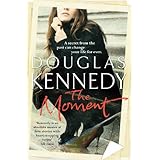
free guides to publishing direct on the kindle; a novel by Douglas Kennedy
called The Moment; First you write: the worst way to become an almost famous
author by Joni Rogers; and a recent discovery for me, Living, Thinking, Looking: essays by Siri Hustvedt, which marries my fascination with philosophy and neuroscience.


I give things names. I label them. It gives them life, personality. My Samsung notebook is Nettie. My red Citroen C4 is Belinda. Don’t ask me why. When I looked at her parked in the space
outside my flat I just knew she was Belinda.
Why not a French name for a French car?
Who knows?
 I have not yet named my Kindle, however. Because I think the name given to my e-reader is sufficient and, actually,
perfect. I love my Kindle. It wasn’t love at first sight, not at
all. More of a slow burner, appropriately.
But the word, Kindle, is so apt and clever. It suggests igniting a fire, and also kin
(ship), family. Familiar. After
initial scepticism and the assertion that it could never replace the feel, the
texture of a paper book, I now read more
than I ever have for years. I still love
books, but there’s definitely room for both, as the reading experience each
offers is both different and complimentary.
What is so appealing about the Kindle is the fact that you can have so
much on the one device and I can chop and change between essays, novels,
non-fiction, etc. It suits the way my
brain works as my mind often jumps about when I read. At the moment, I am simultaneously reading Amazon’s
free guides to publishing direct on the kindle; a novel by Douglas Kennedy
called The Moment; First you write: the worst way to become an almost famous
author by Joni Rogers; and a recent discovery for me, Living, Thinking, Looking: essays by Siri Hustvedt, which marries my fascination with philosophy and neuroscience.

This leads to the other aspect of e-readers that excites me
– I can see a book on Amazon that interests me and a few clicks and seconds
later, I am reading it. I often download
a free sample and then go on to buy the book.
My appetite for reading is now
almost as voracious as when I was a child, which delights me greatly. The fire has been rekindled.
Subscribe to:
Posts (Atom)